

The secret to whipping up a from-scratch meal at a moment’s notice starts with a well-stocked pantry. Here’s how to build one on a budget, including the pantry staples to keep on hand and a free printable checklist to take to the store.
When I was just starting out in life, I had zero clues about keeping a stocked pantry, what should be in it, or what was a reasonable amount to spend. Come to think of it, I’m not even sure I knew what stocking a pantry meant. I wasn’t involved in grocery-buying decisions growing up. My parents both came from homes where stocking a pantry was the norm, but I guess they forgot to teach us kids. (To be fair, maybe they tried and I just wouldn’t listen.) We also had no dedicated pantry or extra freezer. I felt like a stranger peeking in the windows of the well-prepared. I wanted to be like them, but I didn’t know if I could be, or how to start.
Over time I learned that the steps are really simple. I grew into the kind of person who has things on hand and can cook from scratch on short notice, and I’m proud of what I’ve learned. On behalf of well-prepared people everywhere, I want to throw open the doors to the club and welcome you in.
A small, reasonable stockpile saves you money, avoids waste, and works as an ever-rotating emergency stash of food. The idea is simple: when something you already use hits a good price, buy extra, so you’re never forced to pay full price because you ran out.
November is the best time of year to stock up on most pantry basics, because prices are at their lowest then. But you can do this throughout the year as needed.
Stock Up When Things Go on Sale (Mini-Stockpiling)
This is how I keep my grocery costs down even when prices fluctuate. When something I regularly use goes on sale, I buy extra, sometimes a LOT extra. (Not armageddon amounts. Just warehouse-store amounts.) And there are some things I almost never buy unless they’re on sale.
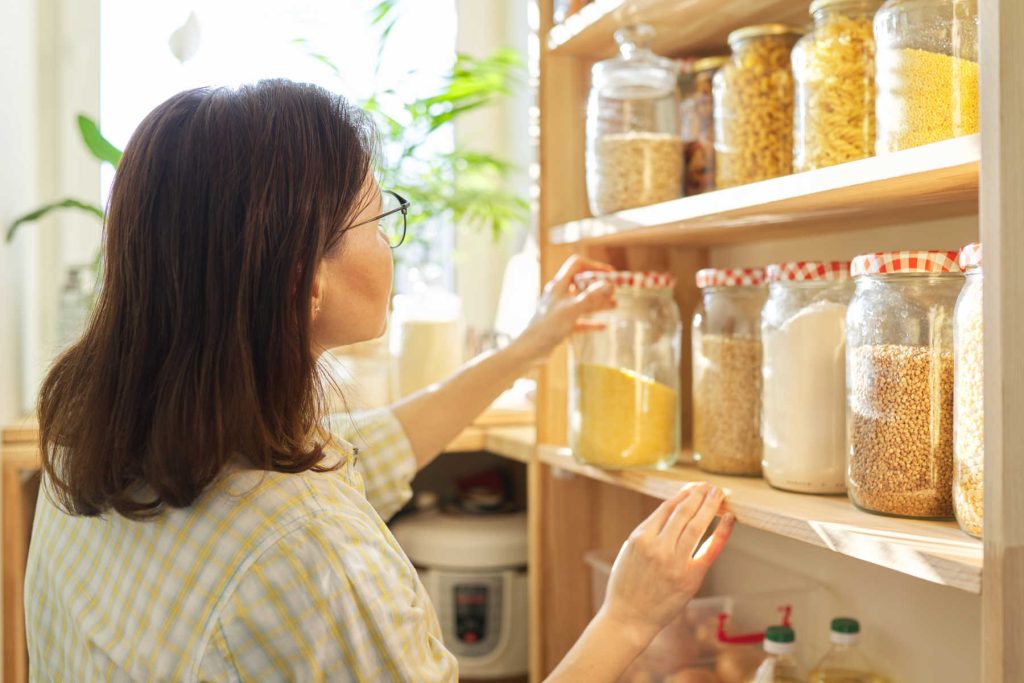
It doesn’t matter if you buy store brands, name brands, or all organic. The method is the same: stock up when your items hit their lowest price.
It is time to stock up when you know:
- It’s a legitimately good price (this is where knowing your buy price comes in)
- It’s something you would buy when it’s not on sale
- You have (or can make) room in today’s grocery budget
- It will keep until you can get around to using it (in other words, it won’t spoil before you get the use out of it)
- You have room for it
When you have the green light on every bullet point, buy what you can comfortably afford right now. If your budget allows, a good rule of thumb is enough to last until the next sale.
The more you learn about how often your items go on sale, at the stores where you shop, the better you can judge how much that is. Pay attention over time and the pattern shows up.
What I Almost Always Stock Up On
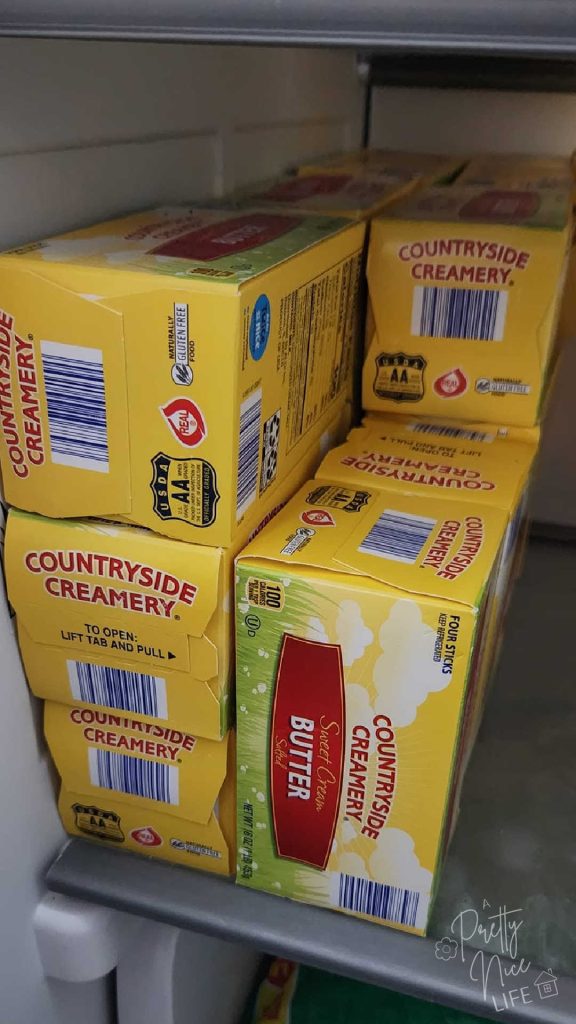
Butter: Goes straight into the freezer in the package. When it’s at a really good price, I buy five pounds.
Cheese: I’ve found that the 2 lb packages of cheese at one of my local stores go on sale about every 4-6 weeks, so if I can, I buy enough to last that long. Shredded cheese freezes perfectly in the store packaging. Just toss it in the freezer as-is!
Ground beef: When it hits a real low, I buy a lot, portion it into 1-lb bags, date them, and freeze. (It’s perfect for casseroles and soups, though not as great for burger patties after freezing.) I still get a little misty over some of the ground beef prices I remember.
Eggs: When eggs hit a really good price, I buy several cartons. It’s just my husband and me, but I find a lot of uses for them: hard-boiled for breakfast or on a salad, breakfast for dinner, baked goods, and so on. Eggs in the shell do not freeze well, so I use them while they are still fresh. However, you can batch-cook these egg muffins and freeze them!
Dry beans, canned tomatoes, pasta, and other shelf-stable staples: Their prices are usually pretty consistent, but when there’s a sale you can bet I stock up.
Start With the Basics Recipes Assume You Have
Very few people start with a truly empty pantry, but some do, like a young adult in a first apartment. That person doesn’t need to stock up on spaghetti, sauce, and meat. Those get bought when they’re on the menu, along with milk and fresh produce. What they do need at home already are the things nearly every recipe assumes you own. Here’s the bare bones list:
Pantry: flour, butter, eggs, oil, salt, pepper, baking soda, baking powder, sugar, honey, vinegar (white is the all-purpose choice, but apple cider or balsamic work too), chicken bouillon cubes, beef bouillon cubes
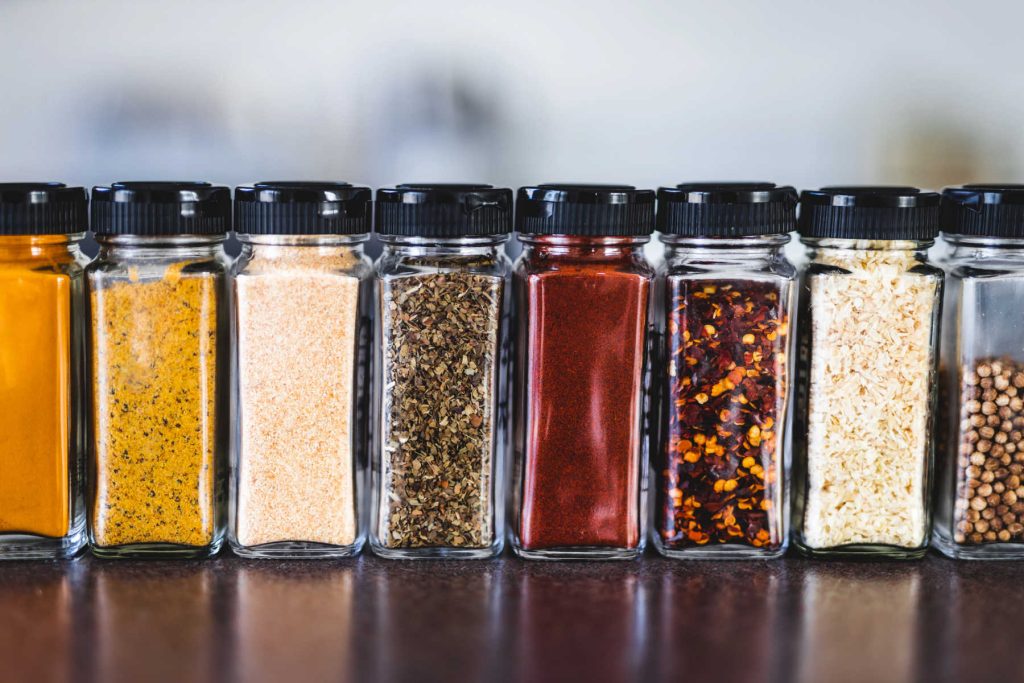
Spices (as you can afford them, or as recipes call for them): Italian seasoning, poultry seasoning, chili seasoning, garlic powder, onion powder
Fridge: soy sauce, ketchup, mustard, mayo, maple syrup
Build It From There
Once the basics are on your shelves, the rest fills in a little at a time. Each time something you use hits its buy price, buy an extra one. Over time you end up with a pantry that covers most meals, and you rarely have to pay full price.
I put together a printable list of the whole pantry I keep stocked, from the basics to the extras. You can download it from my freebie library here.
Where I Store It
- A small closet food pantry with deep shelves
- A small freezer in the garage
- A bathroom closet for toiletries and paper goods
- A few shelves in the garage for paper towels and other large packages
- Here and there throughout the house where it makes sense. I’ve even heard of people who store extras under the bed.
This isn’t extreme prepper stockpiling. It’s just buying low and having enough on hand so you’re not forced to pay full price when you run out.